A SMALL FIELD GUIDE · ŌMIHA / ROCKY BAY
Meet the
wild neighbours.
Look a little closer. Listen a little longer.
There’s a remarkable world just beyond the deck.
Meet three of the birds that bring the reserve to life, and discover the longfin eels in the stream next door. Wildlife moves to its own rhythm; every encounter is different.
THE VOICE IN THE TREETOPS
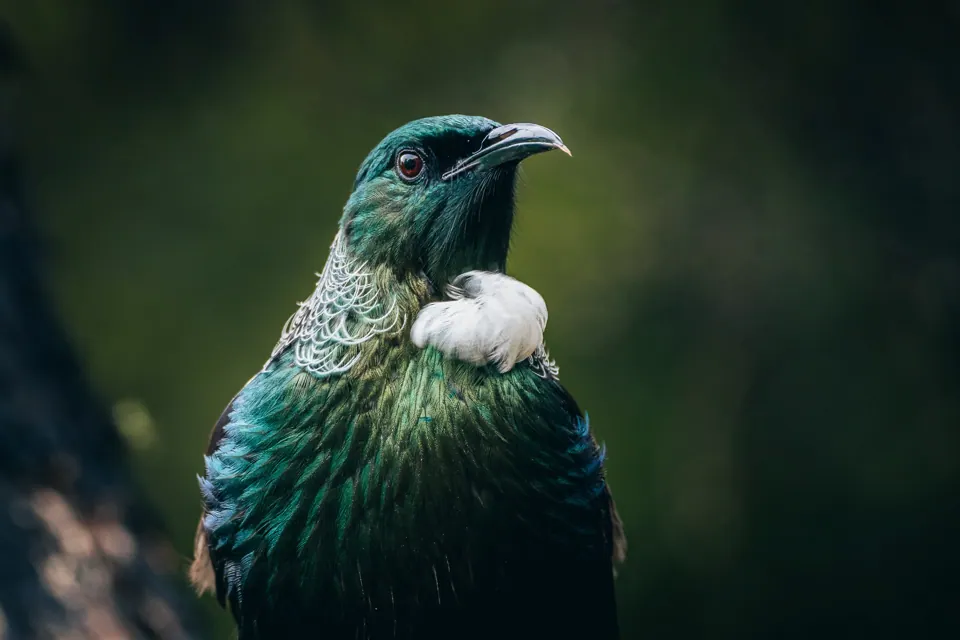
Tūī
Prosthemadera novaeseelandiae
- Look for
- Two curled white tufts at the throat. Dark feathers that catch blue, green and bronze tones in the light, and a curved bill.
- Listen for
- A varied voice that can move from clear musical notes to clicks and harsher sounds.
- Enjoy the encounter
- Look into flowering trees and foliage from a comfortable distance. Binoculars help reveal the colour hidden in the dark plumage.
Species reference: New Zealand Birds Online — Tūī
THE FOREST’S SEED CARRIER
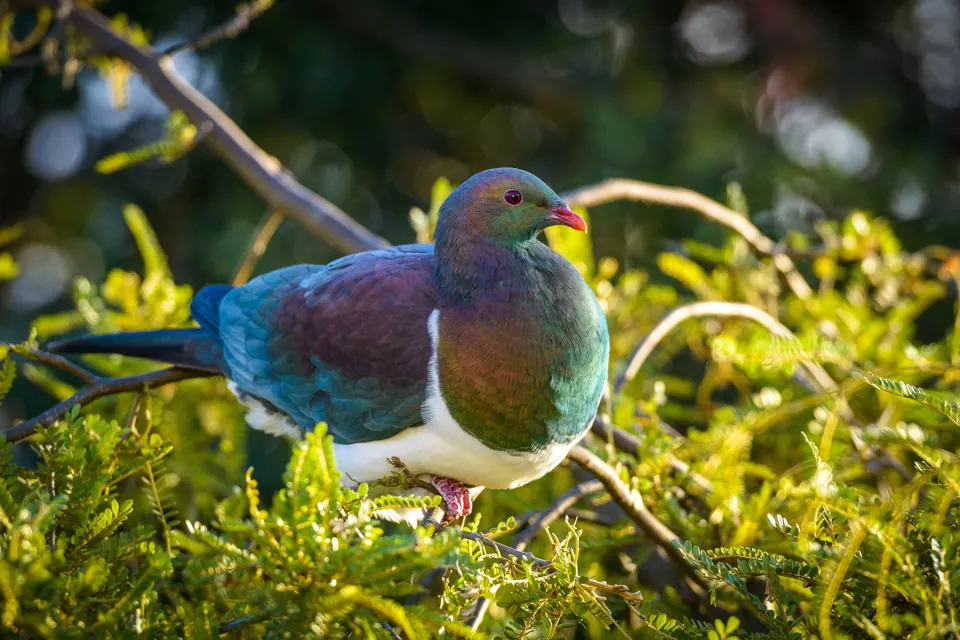
Kererū
Hemiphaga novaeseelandiae · New Zealand pigeon
- Look for
- A large pigeon with a bright white breast below iridescent green-blue plumage, often with purple-bronze tones around the neck.
- Listen for
- The distinctive sound of heavy wingbeats. Kererū are otherwise often quiet.
- Why they matter
- By eating fruit and moving between trees, these native birds carry seeds through the landscape. Watch the canopy and exposed perches without disturbing a resting bird.
Species reference: New Zealand Birds Online — Kererū
A REWARD FOR THE PATIENT OBSERVER
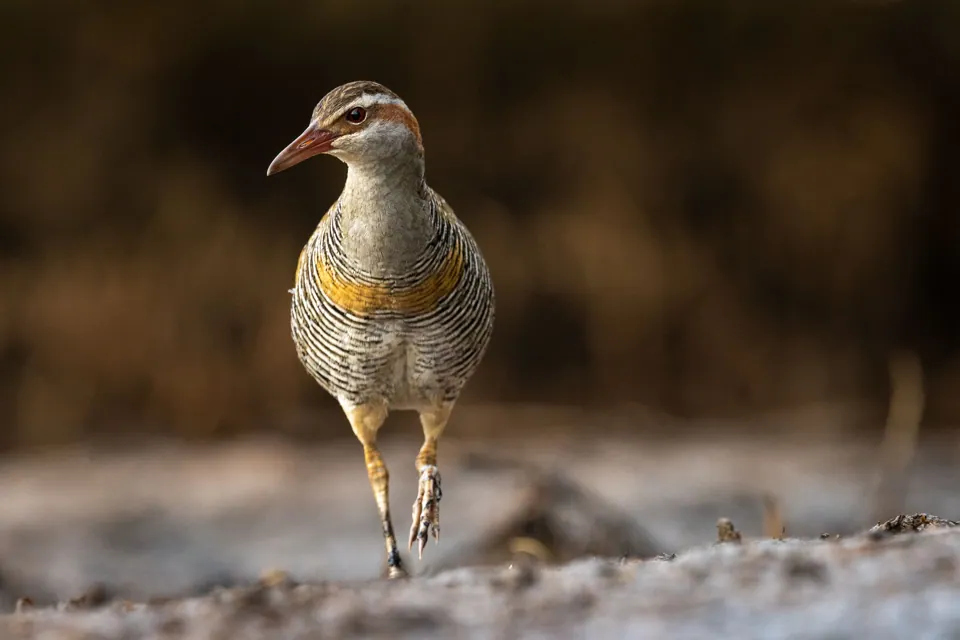
Banded rail
Moho pererū · Hypotaenidia philippensis
- Look for
- A chestnut stripe through the eye, a pale eyebrow and fine black-and-white barring across the body, with a warmer buff band on the breast.
- Where to pause
- This shy bird favours cover around wetland vegetation. A quiet wait at the edge of a public path is better than following a bird into the plants.
- Enjoy the encounter
- Keep still and give it room to move freely. Please don’t play recorded calls or approach nests.
Species reference: New Zealand Birds Online — Banded rail
FROM FRESHWATER TO THE PACIFIC
The longfin eel’s
extraordinary life.
Tuna · Anguilla dieffenbachii
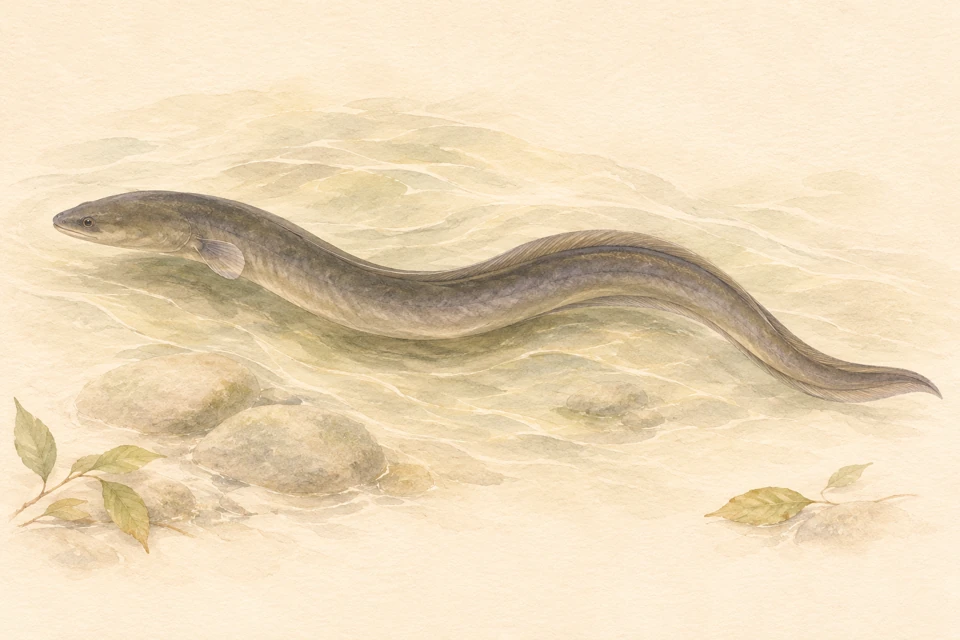
Nature illustration. Species reference: wild_wind / iNaturalist · CC BY 4.0.
The stream beside Waiheke Reserve is home to longfin eels. These fish are endemic to Aotearoa New Zealand and have a conservation status of At Risk – Declining.
They spend much of their lives in freshwater, then migrate into the Pacific Ocean to breed. In streams they often shelter in shade near the banks, logs or rocks. You may need patience to spot one, and a sighting is never guaranteed.
Watch from firm ground. Please don’t feed, catch, touch or disturb them, and supervise children beside the water.
Learn more: Department of Conservation — Eels / tuna · Earth Sciences New Zealand / NIWA — Longfin eel
A LIGHT FOOTPRINT. A LASTING MEMORY.
Be a good
wildlife neighbour.
Pause and observe.
Bring binoculars, stay on public paths and enjoy the view from the deck. Give birds space and keep clear of nests and dense wetland vegetation.
Let wild things be wild.
Avoid feeding, handling and recorded bird calls. Leave the plants, stream and shoreline as you found them. Keep children close beside water.
Keep a little record.
Note what you see, where you were watching and what the bird was doing. An unhurried observation can be more memorable than a perfect photograph.
A small discovery list: □ Tūī□ Kererū□ Banded rail□ Longfin eel